About 28 minutes
Use of Mines in Trench Warfare (From the French School of St. Cyr) — Context and Discussion
Adventure Picaresque Fiction
6,369 recorded words. 4 minutes difference from this book's estimate.
View Gutenberg source #59420
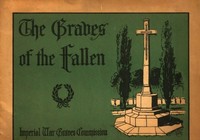
The Graves of the Fallen — A Closer Reading can be approached with a clearer sense of reading commitment from its source measurements: 5,457 words, 24 min estimated reading time, and 1 detected text section.
The text analysis averages about 23.8 words per sentence, while the detected sections provide another way to judge how the source is divided.
Project Gutenberg metadata also associates the work with “Soldiers' monuments,” connecting these edition facts with the source record’s subject description.
Explore this collection
These alternatives are selected using recorded categories and estimated reading time.
About 28 minutes
Adventure Picaresque Fiction
6,369 recorded words. 4 minutes difference from this book's estimate.
View Gutenberg source #59420About 37 minutes
Adventure Picaresque Fiction
8,400 recorded words. 13 minutes difference from this book's estimate.
View Gutenberg source #31256About 48 minutes
Adventure Picaresque Fiction
10,938 recorded words. 24 minutes difference from this book's estimate.
View Gutenberg source #70404Search stored excerpts and compare books → Choose by your preferences →
Choices use stored catalog measurements. Estimates vary with reading speed. A shared category is a catalog label, not a claim that two books have the same argument or literary quality.
Search reads excerpt text stored with this catalog and links to its associated Gutenberg record. The connection is stored in the site database; this tool does not recheck that every excerpt is word-for-word identical to that external record. Excerpt search does not cover every chapter and does not verify historical publication dates.
Catalog snapshot checked: 2026-09-25. Coverage: 90 public books, 90 available source excerpts.
Read the complete public-domain text at its original source.
Read on Project GutenbergKipling wrote this descriptive account at the Imperial War Graves Commission’s request, and the text bears the marks of an official commission document. It opens not with elegy but with a list of commissioners—cabinet ministers, dominion representatives, and military figures—and a dry summary of the Commission’s origins: “In the first days of the war the different armies engaged created organisations, under the direction of the War Office, to register, mark, and tend the graves of British soldiers.” The prose is precise and administrative, yet Kipling’s voice emerges in the careful phrasing of the Commission’s principles, such as the decision that “the cost of carrying out the decisions of the Commission being borne by the respective Governments in proportion to the numbers of their dead.”
The text’s most striking feature is its treatment of the Commission itself as the central protagonist. Kipling lists its members with the gravity of a roll of honour: “The Secretary of State for War. The Secretary of State for the Colonies. The Secretary of State for India.” This bureaucratic catalogue is followed by a history that reads like a foundation myth—the Commission “expanded into an Imperial Commission, representing the Dominions, India, the Colonies, the fighting Services, Labour, the great public departments interested, and the British Red Cross.” The prose is methodical, but the cumulative effect is to present the Commission as a living entity, a collective guardian of memory. Kipling’s own name appears among the appointed members, a detail that subtly underscores his dual role as both chronicler and participant.
A section on finance might seem dry, but Kipling uses it to articulate the imperial compact: “The finance of the Commission is Imperial. All parts of the Empire have generously and unreservedly promised to bear their share of the expenses.” He quotes the Imperial War Conference resolution of June 17, 1918, which “desires to place on record its appreciation of the Labours of the Imperial War Graves Commission.” The language of shared burden and mutual obligation recurs, framing the Commission’s work as a tangible expression of imperial unity. The text does not dwell on individual graves or battles; instead, it foregrounds the administrative machinery that makes commemoration possible. This emphasis on process rather than sentiment is a deliberate rhetorical choice, grounding the Commission’s authority in practical governance.
Douglas MacPherson’s illustrations are mentioned in the opening note: “The Illustrations showing the cemeteries and memorials as they will appear when completed are by Mr. Douglas Macpherson.” This detail reveals the text’s dual nature: it is both a report and a prospectus, describing not only what exists but what is planned. The phrase “as they will appear when completed” introduces a temporal tension—the cemeteries are works in progress, and the book itself is a blueprint for memory. Kipling’s text, by focusing on the Commission’s structure and principles, provides the verbal counterpart to MacPherson’s visual projections. Together, they offer a vision of commemoration that is institutional, forward-looking, and deliberately impersonal, yet infused with the gravity of its subject.
Readers should approach this text as a primary document of institutional memory, not as a literary meditation on war. Kipling’s prose is restrained, his focus on the Commission’s composition and procedures. The excerpts available do not include descriptions of individual cemeteries or the emotional register one might expect; instead, they reveal how the machinery of commemoration was constructed. The book’s value lies in its documentary precision, offering a contemporary account of how the Empire chose to remember its dead.
I keep thinking about The Graves of the Fallen—how carefully it holds the names of thousands, making order out of grief. It reminded me of the quiet weight in History of the Negro Race in America from 1619 to 1880. Vol. 2 Negroes as Slaves, as Soldiers, and as Citizens — Inside the Classic, that same patient, precise honoring of lives often overlooked. Both feel like resting places for memory, not just records.
Answer a few questions and save a private reflection on this device.