1

Great Indian Chief of the West; Or, Life and Adventures of Black Hawk — Inside the Classic
(0 User reviews)
85
Project Gutenberg
2006
Not confirmed
Black Hawk, Sauk chief, 1767-1838; Black Hawk War, 1832; Keokuk, Sauk chief, 1780?-1848; Sauk Indians -- History; Fox Indians -- History
Readers of public-domain and historical texts
Project Gutenberg digital edition
en
Edition facts
Words
76,798
Reading time
334 min
Text sections
9
For Great Indian Chief of the West; Or, Life and Adventures of Black Hawk — Inside the Classic, the stored edition analysis reports 76,798 words, 5 hr 34 min estimated reading time, and 9 detected text sections.
The text analysis averages about 26.9 words per sentence, while the detected sections provide another way to judge how the source is divided.
Project Gutenberg metadata also associates the work with “Black Hawk, Sauk chief, 1767-1838,” connecting these edition facts with the source record’s subject description.
Source:
Project Gutenberg record #18290
Benjamin Drake's 1854 biography of Black Hawk examines the Sauk leader's life through a critical lens on U.S. Indian policy, blending narrative with editorial commentary on broken treaties and frontier violence.
Read the complete public-domain text at its original source.
Read on Project GutenbergBenjamin Drake’s 1854 biography of Black Hawk opens with a preface that immediately sets a critical tone toward U.S. Indian policy, questioning whether the government has met Native peoples “more frequently in bad faith than in a Christian spirit.” This editorial stance frames the entire work, which interweaves Black Hawk’s personal narrative with broader commentary on the Sac and Fox tribes. The book’s structure alternates between chronological episodes—such as the aftermath of Stillman’s Defeat—and reflective passages that challenge contemporary stereotypes of Indians as “faithless, ferocious and untameable.” Drake’s voice is that of a reform-minded chronicler, not a neutral observer.
A Preface That Sets the Argument
Drake’s preface is not a mere courtesy; it is a polemic. He lists grievances against U.S. policy: treaties interpreted “as our interest dictates,” Indians compelled to sell land “upon our own terms,” and citizens permitted to “debase them by spirituous liquors.” The language is direct and accusatory, using parallel structure to build a case. This opening shapes how readers encounter the subsequent narrative, positioning Black Hawk’s story as evidence of systemic injustice rather than a simple adventure tale. Drake explicitly hopes the volume will “awaken the public mind to a sense of the wrongs inflicted upon the Indians.”
Movement Between Battle and Commentary
The narrative shifts rapidly from specific engagements to broader reflections. After describing Stillman’s Defeat—where Black Hawk’s forces were “greatly magnified in number”—Drake details a series of skirmishes: the attack on Indian Creek, the fight at Kellog’s Grove, and the assault on Fort Buffalo Grove. Each episode is rendered with concrete details: the number of dead, the taking of prisoners, the use of scalping by both sides. Yet Drake repeatedly interrupts the action to note the “barbarous practice” of scalping when adopted by U.S. troops, or to quote Black Hawk’s own account of a battle. This alternation between event and editorial keeps the reader aware of the author’s interpretive hand.
Recurring Images of Pursuit and Retreat
Across the excerpts, a pattern of pursuit and retreat emerges. Black Hawk moves women and children to the Four Lakes; war parties are “sent out”; U.S. troops “follow and overtake” Indians in a swamp. The landscape itself becomes a character: the headwaters of Rock River, the sources of the Kish-wa-co-kee, the tributaries of Fox River. These place names recur as markers of contested ground. Drake also emphasizes the asymmetry of the conflict—frontier families “massacred with savage ferocity,” but also U.S. soldiers shooting down and scalping eleven Sacs. The repeated phrase “rushed upon them” appears in Black Hawk’s own reported speech, creating a verbal echo that ties the chief’s perspective to the author’s narrative.
The Author’s Voice and the Chief’s Words
Drake frequently incorporates Black Hawk’s own statements, though the excerpts show these are mediated through translation and editorial selection. In the Fort Buffalo Grove account, Black Hawk is quoted directly: “We concealed ourselves until they came near enough, and then commenced yelling and firing.” The chief describes a U.S. officer as “a small man” who “addressed his warriors in a loud voice.” These details humanize both sides, but Drake controls the frame. He does not present Black Hawk’s words as unmediated testimony; they are embedded within a third-person narrative that also includes casualty counts and tactical analysis. This layered structure invites readers to weigh the chief’s perspective against the author’s critical commentary.
Drake’s biography is best approached as a document of its time—a reformist text that uses Black Hawk’s life to argue against prevailing Indian policy. Readers should attend to the interplay between narrated events and editorial asides, noting where Drake lets Black Hawk speak and where he speaks for him. The work’s value lies not in its completeness as history but in its explicit moral framework and its effort to give a Native leader a voice within a nineteenth-century American format.
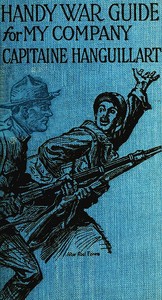
Drake’s portrait of Black Hawk lingers on the sorrow of commands given against one’s own conscience. I find a quiet echo in a later volume, the Handy War Guide for My Company: Handy Company Commander’s Guide — A Reader’s Guide, where duty weighs similarly upon the one who must lead. Both speak of burdens carried in silence.
There are no reviews for this eBook.
There are no comments for this eBook.
Reader reflection
How will you remember this book?
Save your reaction, strongest insight, and memorable passage.
Your progress
0
/
10
2
Did this book hold your interest?
3
Is this a title you would suggest to others?
4
How easy was the book to follow?
5
How much did the book move you?
6
How well did it match your expectations?
7
Is this a title worth rereading?
8
Could you follow the author’s main argument?
9
What changed or sharpened your thinking?
10