1

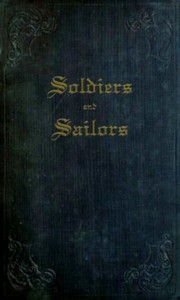
Soldiers and Sailors or, Anecdotes, Details, and Recollections of Naval and Military Life, as Related to His Nephews, by an Old Officer. — Text and Context
(0 User reviews)
222
Project Gutenberg
2018
Not confirmed
Great Britain. Army -- Military life; Great Britain. Royal Navy -- Anecdotes; Great Britain. Army -- Anecdotes; Great Britain. Royal Navy -- Sea life; Soldiers -- Anecdotes; Sailors -- Anecdotes
Readers of public-domain and historical texts
Project Gutenberg digital edition
en
Edition facts
Words
78,575
Reading time
342 min
Text sections
26
Soldiers and Sailors or, Anecdotes, Details, and Recollections of Naval and Military Life, as Related to His Nephews, by an Old Officer. — Text and Context can be approached with a clearer sense of reading commitment from its source measurements: 78,575 words, 5 hr 42 min estimated reading time, and 26 detected text sections.
The text analysis averages about 19.5 words per sentence, while the detected sections provide another way to judge how the source is divided.
Project Gutenberg metadata also associates the work with “Great Britain. Army -- Military life,” connecting these edition facts with the source record’s subject description.
Source:
Project Gutenberg record #57903
An uncle-nephew dialogue frames this 1842 collection of anecdotes, where an old officer uses historical examples and personal recollections to illustrate military and naval life, emphasizing tactics, discipline, and the character of soldiers and sailors.
Read the complete public-domain text at its original source.
Read on Project GutenbergThis 1842 volume adopts a conversational frame: an old officer relates anecdotes to his nephews, blending historical examples with personal recollection. The narrator’s voice is direct and didactic, often punctuated by the nephews’ interjections—"Very likely, uncle! very likely!"—which keep the exposition lively. The work draws on a wide range of sources, from Alexander the Great to Ibrahim Pasha, and includes detailed discussions of uniforms, weapons, and tactics. John Gilbert’s engravings, mentioned on the title page, would have complemented the text’s emphasis on visual detail.
The Uncle-Nephew Dynamic
The framing device is central to the book’s tone. The old officer addresses his nephews directly, and their occasional questions—like "How foolish, to divide his army"—allow him to reinforce moral and tactical lessons. This structure mimics oral storytelling, making the anecdotes feel immediate. The narrator’s authority is established through his assumed experience, yet he avoids boastfulness, instead presenting himself as a conduit for accumulated wisdom. The nephews’ responses are carefully scripted to guide the reader’s interpretation, ensuring that the didactic purpose never falters.
Tactical Principles and Historical Examples
The text devotes considerable space to military tactics, often illustrated by historical episodes. For instance, the story of Ibrahim Pasha’s disastrous retreat from Syria is used to argue against dividing an army. The narrator lists four principles of military organization, including unified command and promotion within regiments. These are presented as universal truths, though the examples are drawn from European and Near Eastern history. The discussion of breaking the enemy’s line—citing Howe, Vincent, Duncan, and Nelson—shows an awareness of naval tactics as well. The excerpts suggest a belief that tactical knowledge is essential for success, a theme that recurs throughout.
Discipline and Its Limits
Discipline is a recurring concern, explored through contrasting anecdotes. The chapter on discipline includes a story of a reckless Irishman whose "mad freak" leads to a sentence, and a contrasting account of "selfish severity" on board the Atalanta. These examples highlight the tension between necessary order and excessive harshness. The narrator also discusses the Articles of War for both army and navy, and the importance of standing properly—a seemingly minor detail that underscores the value placed on physical comportment. The inclusion of mutilation among foreign troops serves as a negative example, reinforcing British standards.
Uniforms and Visual Identity
A full chapter is devoted to uniforms, from admirals’ dress at Greenwich to the full dress of life-guards, dragoons, and highlanders. The narrator describes specific details—such as the dress of an admiral of the fleet—and includes an anecdote about King George IV and a life-guardsman. This attention to appearance reflects the period’s interest in military spectacle and hierarchy. The engravings by John Gilbert likely depicted these uniforms, making the visual and textual elements complementary. The chapter also touches on the practical aspects of uniform, such as the difference between light infantry and fusiliers, linking dress to function.
Readers should approach this book as a period piece that reveals mid-19th-century attitudes toward military life. The uncle-nephew frame is not merely decorative; it shapes how information is presented and received. The anecdotes are selected for their moral and practical lessons, not for narrative completeness. Those interested in the history of military education or the evolution of children’s non-fiction will find it a valuable document. The text rewards attention to its small details—a turn of phrase, a nephew’s question, a historical name—that together build a portrait of the ideal soldier and sailor.
Reading the old officer’s tales of discipline and grit, I remembered my grandfather’s quiet pride when he spoke of comrades who fought for causes larger than themselves. That same hush fell over me years ago with The Negro as a soldier — Reading Notes, where courage needed no ornament, just steadiness. Some books feel less like stories and more like handed-down memories.
There are no reviews for this eBook.
There are no comments for this eBook.
Reader reflection
How will you remember this book?
Save your reaction, strongest insight, and memorable passage.
Your progress
0
/
10
2
How did the book work for you overall?
3
How likely are you to recommend this book?
4
How much effort did this book require?
5
How understandable was the text?
6
How original did the book feel?
7
Would you like to discuss this book with someone?
8
What was its emotional impact?
9
What did this book teach you most?
10