1

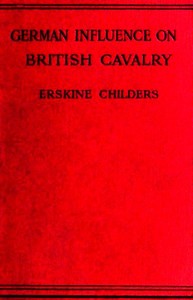
German Influence on British Cavalry — Story, Setting & Ideas
(0 User reviews)
337
Project Gutenberg
2018
Not confirmed
Cavalry; Cavalry drill and tactics; Great Britain. Army -- Cavalry -- History
Readers of public-domain and historical texts
Project Gutenberg digital edition
en
Edition facts
Words
52,382
Reading time
228 min
Text sections
6
This digital edition of German Influence on British Cavalry — Story, Setting & Ideas is described by source-level measurements including 52,382 words, 3 hr 48 min estimated reading time, and 6 detected text sections.
The text analysis averages about 24.0 words per sentence, while the detected sections provide another way to judge how the source is divided.
Project Gutenberg metadata also associates the work with “Cavalry,” connecting these edition facts with the source record’s subject description.
Source:
Project Gutenberg record #56924
Erskine Childers dissects General von Bernhardi's 'Cavalry in War and Peace' and British cavalry manuals, exposing contradictions in mounted combat doctrine and arguing for a rifle-based system over lance and sword.
Read the complete public-domain text at its original source.
Read on Project GutenbergErskine Childers opens this 1911 essay by positioning it as a sequel to his earlier work War and the Arme Blanche, but immediately narrows his focus to a specific target: General von Bernhardi's Reiterdienst, recently translated as Cavalry in War and Peace. Childers is alarmed that this German treatise, endorsed by General Sir John French, is gaining influence in British military circles. He declares his aim to 'arouse those critical faculties and that common-sense' of English readers, arguing that Britain should break from imitating foreign models and instead build on its own war experience. The preface sets a combative, reformist tone, warning that the current tactical system is in 'a state of chaos' caused by retaining the lance and sword.
A Preface That Frames the Debate
Childers uses the preface to establish his authority and purpose. He references his previous book and Lord Roberts's introduction, then zeroes in on von Bernhardi's work as a 'brilliant and authoritative treatise' that risks becoming a standard text unless challenged. The author's strategy is to expose contradictions within von Bernhardi's own arguments and between German regulations and practical warfare. He insists that the 'indispensable condition' for cavalry revival is to 'sweep away root and branch the tactical system founded on the lance and sword' and replace it with one based on the rifle. This opening section signals that the essay will be a polemic, not a neutral survey, and that Childers will rely on close reading of official manuals and von Bernhardi's text.
Dissecting the German Regulations
In the middle excerpts, Childers performs a line-by-line critique of German cavalry regulations as interpreted by von Bernhardi. He highlights a key contradiction: the regulations demand that cavalry 'know at four miles what the composition, strength, and intentions of the enemy are,' yet the prescribed echelon system assumes the enemy is no stronger than one's own force—a 'childlike scheme' suitable only for peace maneuvers. Childers quotes von Bernhardi's own admission that 'only by a protracted action can the enemy be forced to disclose his strength and intentions,' and that such action requires fire. But he then notes that von Bernhardi immediately undercuts this by forbidding fire-action unless the enemy is known to be greatly inferior. This 'deadly instinct for self-refutation' becomes a recurring theme.
The Problem of Firepower and Mounted Attack
Childers continues his forensic analysis by examining von Bernhardi's treatment of specific regulations. Regulation No. 519, which directs cavalry to 'break through detachments of all arms,' is dismissed by von Bernhardi as unrealistic—yet Childers points out that mounted riflemen in the South African War routinely did just that. Regulation No. 403, which insists on personal observation by the commander for offensive action, is shown to be absurd under modern fire conditions: 'one brigade will often fight on foot, the other mounted,' making centralized control impossible. Childers's method is to let von Bernhardi's own words condemn him, while also drawing on British combat experience to argue that the German model is both inconsistent and inferior. The tone is caustic, with phrases like 'poor cavalry!' and 'true comment, but how futile!'
A Call for Independence and Reform
Throughout the essay, Childers returns to his central thesis: British cavalry must abandon the cult of the arme blanche and embrace the rifle. He argues that the German regulations, despite their prestige, are internally contradictory and unsuited to modern warfare. The excerpts show him contrasting von Bernhardi's poetic exhortations—'the enemy's fire must not paralyze the id'—with the practical realities of fire-swept battlefields. Childers's own prose is sharp and argumentative, aiming to provoke readers into questioning received doctrine. He does not claim to offer a complete alternative system, but insists that the first step is to recognize the chaos and break free from 'the demoralizing habit of imitating foreign models.'
Readers approaching this essay should treat it as a polemical intervention in a specific historical debate, not as a comprehensive manual. Childers assumes familiarity with his earlier work and with von Bernhardi's text, so newcomers may benefit from reading those first. The essay's value lies in its close textual criticism and its insistence on evidence from actual combat—particularly the South African War—over abstract doctrine. Pay attention to how Childers uses von Bernhardi's own words to build his case, and note the recurring tension between official regulations and practical experience.
There's something almost melancholy in how Childers watches the cavalry cling to sabers while the rifle waits in the wings—doctrine outliving its usefulness. It reminds me of another quiet reckoning, the one in The Colored Regulars in the United States Army — Context and Discussion, where courage had to argue with prejudice for its own proof. Both books feel like old letters from a past that couldn't quite see itself.
There are no reviews for this eBook.
There are no comments for this eBook.
Reader reflection
How will you remember this book?
Save your reaction, strongest insight, and memorable passage.
Your progress
0
/
10
2
Did this book hold your interest?
3
Is this a title you would suggest to others?
4
What was the reading difficulty like?
5
What was the strongest part of the book?
6
Did it raise ideas you would like to talk about?
7
Did anything about the book feel genuinely new?
8
Would you read this book again?
9
Which lesson or insight stayed with you?
10