1

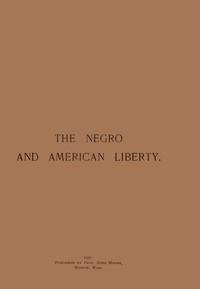
What the Negro Has Done for Liberty in America — Inside the Classic
(0 User reviews)
333
Project Gutenberg
2021
Not confirmed
African American soldiers; United States -- History -- Civil War, 1861-1865 -- Participation, African American
Readers of public-domain and historical texts
Project Gutenberg digital edition
en
Edition facts
Words
4,969
Reading time
22 min
Text sections
2
The source record for What the Negro Has Done for Liberty in America — Inside the Classic measures this digital text at 4,969 words, 22 min estimated reading time, and 2 detected text sections.
The text analysis averages about 22.3 words per sentence, while the detected sections provide another way to judge how the source is divided.
Project Gutenberg metadata also associates the work with “African American soldiers,” connecting these edition facts with the source record’s subject description.
Source:
Project Gutenberg record #66329
Prof. John Moore's 1895 work argues that African Americans, despite enslavement and oppression, displayed 'magnanimity and noble manhood' by fighting for American liberty. Using Crispus Attucks as a central example, Moore's diction and rhetorical structure reveal his effort to counter prevailing narratives of Black passivity.
Read the complete public-domain text at its original source.
Read on Project GutenbergProf. John Moore opens his 1895 pamphlet by acknowledging a paradox: that the Negro, enslaved and denied basic rights, could be 'efficiently related to the cause of freedom in America.' He immediately confronts the reader with the historical injustice—forced importation, treatment as property, social exclusion—before pivoting to the central claim that despite these conditions, Black Americans exhibited an 'intense love of freedom.' This rhetorical structure, which juxtaposes oppression with agency, sets the tone for a work that is as much a moral argument as a historical record.
Diction of Defiance and Duty
Moore’s word choices consistently frame Black military service as an act of volition and moral superiority. He describes the Negro’s willingness to fight 'even when his own prospect of sharing in it was not promising,' using the concessive 'even when' to underscore sacrifice. The phrase 'magnanimity and noble manhood' elevates the subject beyond mere patriotism to a kind of ethical heroism. Notably, Moore avoids passive constructions; Black soldiers are not 'used' but act, fight, and sacrifice. This active voice is a deliberate authorial choice to counter the era’s common depiction of African Americans as passive recipients of freedom.
Crispus Attucks as Symbolic Anchor
The only extended narrative in the excerpts centers on Crispus Attucks, whom Moore presents as 'the most conspicuous figure' in the Boston Massacre. Moore includes a direct quotation—Attucks shouting, 'The way to get rid of these soldiers is to attack the main guard'—which is the only reported speech in the text. This choice gives Attucks a voice and agency, transforming him from a victim into a leader. Moore also notes that Attucks had escaped slavery twenty years earlier, linking the fight for colonial liberty to the personal fight for freedom. The detail that advertisements for his capture were published 'with ample rewards' but he 'was not seized' subtly underscores Black resistance and community solidarity.
Rhetorical Structure: Acknowledging Then Refuting
Moore’s argument follows a consistent pattern: he first concedes the dominant white narrative—that Negroes had little reason to fight for a country that oppressed them—then systematically refutes it. The opening paragraph begins with 'It seems like a paradox,' immediately signaling that he will challenge the reader’s assumptions. He lists the reasons for skepticism (slavery, social ban, hopelessness) before delivering the counterpoint: 'But notwithstanding this the colored man displayed an intense love of freedom.' This 'but' pivot is the structural engine of the pamphlet, repeated in various forms. The effect is a cumulative refutation that builds moral pressure on the reader to reconsider.
The Unfinished Argument: What the Excerpts Leave Unsaid
The excerpts provide only the opening and a portion of the Attucks episode, so the full scope of Moore’s evidence remains unclear. He promises 'a presentation of a few of the facts' and notes that 'it would require volumes to record what the colored man has done,' suggesting the pamphlet is a selective sampler rather than a comprehensive history. Readers should note that the text is structured as a series of examples rather than a continuous narrative. The catalog subjects—African American soldiers and Civil War participation—indicate that later sections likely cover the Civil War, but the excerpts do not reveal whether Moore includes other figures or battles. The brevity of the work (4,969 words) means each example must carry significant rhetorical weight.
Moore’s pamphlet is best read as a deliberate counter-narrative, written at a time when the contributions of Black Americans to national liberty were routinely minimized. Pay attention to how he uses contrast—between oppression and action, between expectation and reality—to build his case. The work is short enough to be consumed in one sitting, but its rhetorical strategies reward closer analysis of how Moore constructs authority and emotion through word choice and structure.
Reading about Crispus Attucks standing his ground, I remembered my grandfather's quiet pride telling me that story for the first time. It felt like uncovering a hidden foundation beneath a house I'd always lived in. That same stirring sense of forgotten courage surfaced again in The Romance of Modern Sieges Describing the personal adventures, resource and daring of besiegers and beseiged in all parts of the world — Key Ideas to Explore, where resilience under pressure isn't just described—it's breathed.
There are no reviews for this eBook.
There are no comments for this eBook.
Reader reflection
What did you think of this book?
Answer a few questions and save a private reflection on this device.
Your progress
0
/
10
2
What was your overall reaction to the book?
3
Would you encourage someone else to read it?
4
What was the reading difficulty like?
5
Did any part of the book feel personally relevant?
6
How much did the book move you?
7
Did you gain anything practical from the text?
8
How clearly were the main ideas presented?
9
What did this book teach you most?
10