1

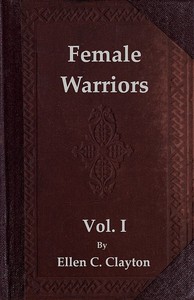
Female Warriors, Vol. 1 (of 2) Memorials of Female Valour and Heroism, from the Mythological Ages to the Present Era. — Text and Context
(0 User reviews)
793
Project Gutenberg
2013
Not confirmed
Women -- Biography; Women soldiers; Amazons
Readers of public-domain and historical texts
Project Gutenberg digital edition
en
Edition facts
Words
51,435
Reading time
224 min
Text sections
6
This digital edition of Female Warriors, Vol. 1 (of 2) Memorials of Female Valour and Heroism, from the Mythological Ages to the Present Era. — Text and Context is described by source-level measurements including 51,435 words, 3 hr 44 min estimated reading time, and 6 detected text sections.
The text analysis averages about 22.5 words per sentence, while the detected sections provide another way to judge how the source is divided.
Project Gutenberg metadata also associates the work with “Women -- Biography,” connecting these edition facts with the source record’s subject description.
Source:
Project Gutenberg record #43646
Ellen C. Clayton's 1879 volume compiles accounts of female warriors from myth to the 13th century, blending legendary Amazons with historical figures like Boadicea and Jeanne d'Arc. The narrative voice shifts between breathless admiration and grim reportage, with pacing that lingers on dramatic sieges and sudden betrayals.
Read the complete public-domain text at its original source.
Read on Project GutenbergEllen C. Clayton opens her 1879 volume with a mythological sweep, cataloguing warlike goddesses and Amazon tribes before alighting on Semiramis and Camilla. The prose moves in quick, declarative sentences, piling epithets—'the Semiramis of the North,' 'this fiend in human shape'—that signal a moralizing bent. Yet the pacing is uneven: a single paragraph may race through centuries of Sarmatian customs, then slow to a crawl over a single siege, as when the Countess of Dunbar, 'Black Agnes,' holds her castle with what the text calls 'stratagem' and 'derision.' Clayton's voice is that of a Victorian compiler, fond of exclamation and arch aside, but she lets the goriest details—a tyrant's 'refined cruelty,' a widow crushed in her husband's grave—stand without comment. The result is a work that feels both breathless and deliberate, as if the author cannot decide whether to moralize or simply marvel.
Mythological Framing and Abrupt Transitions
The first chapter vaults from 'Mythology—Warlike Goddesses' to 'More Modern Tribes of Amazons in Asia and Africa' in a single heading, and the prose follows suit. Clayton treats myth and history as contiguous: Camilla, Queen of the Volscians, appears alongside Tomyris of the Massagetæ with no shift in register. The effect is disorienting but deliberate—she is building a lineage of female martial prowess that needs no chronological apology. Transitions are often blunt: 'Prussia was at last converted to Christianity, and adopted the manners and customs of Germany, of which it is now the leading State.' This abruptness can feel like a dropped thread, but it also mirrors the episodic structure of the source material, which Clayton likely compiled from multiple chronicles.
Grim Set Pieces and the Pace of Violence
When Clayton slows down, she does so for scenes of concentrated brutality. The siege of Culm in 1240 receives a full paragraph: the women 'clad themselves in mail, and mounted the walls with spears in their hands,' a ruse that makes the Prussians withdraw. But the next paragraph dispatches the entire conversion of Prussia in a single sentence. The most extended set piece is the story of Blanche de Rossi, whose husband is slain by the 'fiend in human shape' Acciolin. Clayton narrates her leap from a window, her sprained shoulder, her rape, and her suicide by falling into her husband's grave—all in a single, unbroken paragraph. The pace here is almost clinical, the details accumulating without moral commentary, until the final image of 'crushed to death by the falling earth and stones' lands with a thud.
The Authorial Voice: Exclamation and Understatement
Clayton's narrator is not shy. She calls Acciolin 'one of the most infamous of these mercenaries' and 'this fiend in human shape,' yet she also deploys understatement: 'Directly the villain set eyes upon his beautiful captive, he was seized with a violent passion for her.' The exclamation points are reserved for moments of triumph—'How deep was the respect entertained for the memory of Blanche of Castille!'—while the horrors are reported flatly. This inconsistency is a feature, not a bug: it suggests a writer who is both appalled and fascinated, who cannot resist a dramatic epithet but also trusts the facts to speak for themselves. The voice is that of a Victorian lady who has read too many chronicles of atrocity and has decided to let the worst of them stand without softening.
Readers should note that Clayton's volume is a compilation, not a monograph. The excerpts suggest she relied heavily on printed histories and perhaps on earlier collections of 'remarkable women.' The pacing—now galloping, now glacial—reflects the unevenness of her sources. Approach this as a cabinet of curiosities, not a unified argument. The most rewarding passages are the slow ones, where the prose settles into a scene and lets the details accumulate. The rest is a kind of breathless catalogue, best taken in small doses.
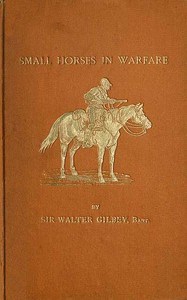
The rain drummed on the window as I closed Female Warriors, still thinking of Boadicea’s desperate chariot. My gaze drifted to a shelf I rarely touch, and I pulled down something entirely different—a slim volume about Small Horses in Warfare — A Reader’s Guide. Odd, how centuries of valour shrink to a question of pony endurance, yet the same stubborn heart remains.
There are no reviews for this eBook.
There are no comments for this eBook.
Reader reflection
Record your reading impressions
A brief reflection can help important ideas stay with you longer.
Your progress
0
/
10
2
How much did you enjoy the reading experience?
3
Would you pass this book on to a friend?
4
How much effort did this book require?
5
Did it raise ideas you would like to talk about?
6
Which part made the strongest impression?
7
Do you expect to return to this book?
8
How did the pace of the book feel?
9
Which lesson or insight stayed with you?
10