1

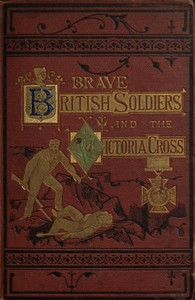
Brave British soldiers and the Victoria Cross a general account of the regiments and men of the British Army, and stories of the brave deeds which won the prize "for — Edition Insights
(0 User reviews)
980
Project Gutenberg
2021
Not confirmed
Great Britain. Army -- Biography; Soldiers -- Great Britain -- Biography; Great Britain -- History, Military -- 19th century; Victoria Cross
Readers of public-domain and historical texts
Project Gutenberg digital edition
en
Edition facts
Words
151,826
Reading time
661 min
Text sections
35
Before opening Brave British soldiers and the Victoria Cross a general account of the regiments and men of the British Army, and stories of the brave deeds which won the prize "for — Edition Insights, the edition data offers a quick orientation: 151,826 words, 11 hr 1 min estimated reading time, and 35 detected text sections.
The text analysis averages about 25.6 words per sentence, while the detected sections provide another way to judge how the source is divided.
Project Gutenberg metadata also associates the work with “Great Britain. Army -- Biography,” connecting these edition facts with the source record’s subject description.
Source:
Project Gutenberg record #65654
Editorial note on S. O. Beeton's collection of Victoria Cross narratives, examining the editor's rhetorical strategies in framing soldierly courage for a boy readership, with attention to diction, dialogue, and descriptive choices in the excerpts.
Read the complete public-domain text at its original source.
Read on Project GutenbergSamuel Orchart Beeton's Brave British Soldiers and the Victoria Cross opens with a striking rhetorical gambit: the editor asserts that 'brave Boy looks like a pleonasm,' embedding a claim of natural boyish courage into the very premise of the book. This editorial note examines how Beeton's authorial choices—in diction, dialogue, and description—shape the presentation of military heroism. The excerpts reveal a deliberate patterning of language that elevates individual acts of valour while framing them within a larger narrative of regimental duty and imperial purpose. Rather than a simple chronicle of Victoria Cross awards, the text employs vivid battle descriptions, reported speech from commanders, and a consistent emphasis on physical sacrifice to construct a particular ideal of soldierly conduct.
The Rhetoric of Boyish Bravery
Beeton's preface directly addresses his intended audience, claiming that 'Boys—worthy to be called Boys—are naturally brave.' This assertion is not merely prefatory; it establishes a tonal contract with the reader. The editor contrasts the 'brave man' with the 'brave Boy,' arguing that experience complicates manly courage, whereas boyish bravery is innate. This framing shapes the subsequent narratives: acts of valour are presented not as exceptional but as the natural expression of a boy's character. The diction throughout the excerpts reinforces this—words like 'intrepid,' 'gallant,' and 'gloriously' recur, creating a lexicon of praise that aligns with the preface's claim. The editor's voice, though ostensibly neutral, consistently guides the reader toward admiration, using exclamatory phrases such as 'There spoke the spirit of a true soldier' to model the desired response.
Dialogue as a Tool of Characterisation
Beeton frequently incorporates reported speech from military figures, particularly General Havelock, to lend authority and emotional weight to the narrative. In the excerpt describing the Battle of Oude, Havelock's words are quoted directly: 'The communications convince me of the extreme delicacy and difficulty of any operation to relieve Inglis; it shall be attempted, however, at every risk.' This dialogue serves a dual purpose: it characterises Havelock as resolute and duty-bound, and it provides a model of leadership for the boy reader. Similarly, Havelock's tribute to Private Patrick Cavanagh—'Had he survived, he should have worn the Victoria Cross, which never could have glittered on a braver breast'—uses direct speech to elevate the soldier's sacrifice. The editor selects these quotations to dramatise the moment, turning historical report into a moral lesson about courage and recognition.
Descriptive Patterns in Battle Scenes
The battle descriptions in the excerpts are marked by a consistent structural pattern: the enemy's position is described in tactical detail, the British forces are shown advancing under fire, and a specific soldier's act of bravery is highlighted. For instance, the account of the advance on Oude notes that 'the enemy enjoyed every advantage of position,' yet the British attack proceeds. The description of Private Cavanagh—'he stood there immovable as a rock, till he was literally cut to pieces'—employs a simile that emphasises steadfastness. The editor's choice of 'literally' underscores the physical reality of the sacrifice. This pattern recurs: the narrative builds tension through geographic and tactical detail, then focuses on a single figure whose actions embody the collective spirit. The result is a blend of military reportage and hagiographic vignette.
The Role of Regimental Identity
Throughout the excerpts, Beeton carefully identifies soldiers by their regiment—'23rd Regiment (Royal Welsh Fusiliers),' '78th Highlanders,' '1st Madras Fusiliers'—and often notes the regiment's reputation. This practice ties individual valour to institutional pride. The editor writes that 'there were two regiments in whose courage and steadiness under fire the general had the fullest confidence; to them was assigned the post of honour.' Such statements reinforce the idea that bravery is both personal and collective. The regimental framework also serves a didactic purpose: it allows the boy reader to associate specific units with particular virtues. The illustrations mentioned in the front matter—such as 'Corporal Robert Shields... finding the Body of his wounded Adjutant'—further cement this link between individual action and regimental identity, visualising the bonds of duty and comradeship that the text celebrates.
Beeton's editorial choices in Brave British Soldiers and the Victoria Cross reveal a careful construction of heroism tailored to a young audience. By blending direct address, tactical description, and reported dialogue, he creates a narrative that is both instructive and inspirational. Readers attentive to these rhetorical strategies will find a work that, while rooted in historical events, is shaped by a clear authorial vision of what boyhood courage should look like. The excerpts offer a window into Victorian ideals of masculinity and military virtue, framed by an editor who understood his audience's appetite for tales of sacrifice and glory.
There’s something touching about how Beeton shaped those Victoria Cross tales for boys—so earnest, so sure of what courage meant. Reading it now, I find myself thinking of a quieter, different kind of bravery, the slow bureaucratic kind chronicled in Integration of the Armed Forces, 1940-1965 — Edition Insights. Both books speak of duty, but one's a shout, the other a long, weary sigh. Both old friends now.
There are no reviews for this eBook.
There are no comments for this eBook.
Reader reflection
Your personal reading reflection
Build a private reading journal entry for this title.
Your progress
0
/
10
2
Was reading this book enjoyable?
3
Would you encourage someone else to read it?
4
How easy was the book to follow?
5
Do you expect to return to this book?
6
Did the book give you something worth debating?
7
How did the reading compare with what you expected?
8
Did the story or argument move comfortably?
9
What is the main idea you are taking away?
10