The translator's preface immediately signals the book's practical aim: to present military data "corrected up to date" as of 1890, with German terms like Landwehr and Ersatz retained for lack of English equivalents. This lexical choice reveals a tension between accessibility and precision that runs through the work.
Köppen's preface frames the survey with the maxim Si vis pacem, para bellum, arguing that studying foreign armies is essential for understanding one's own relative strength. The text thus positions itself as a tool for strategic comparison rather than mere description.
Diction and the Translator's Hand
Lord Gleichen's translation preserves German military terminology without apology, creating a hybrid lexicon. For instance, Landwehr and Ersatz are used throughout, even when applied to non-German forces. This choice forces the reader to engage with the original conceptual framework rather than a domesticated English equivalent. The translator also inserts corrigenda for Germany, France, Italy, and Russia, acknowledging that the text was updated during printing—a rare glimpse into the editorial process of a late-Victorian military handbook.
The preface's tone is brisk and technical, avoiding rhetorical flourish. Phrases like "the spirit of self-sacrifice which has prompted the French to lay the heavy burden on themselves" reveal a measured admiration, but the overall voice remains that of a staff officer compiling intelligence.
Descriptive Precision in Uniforms and Equipment
The descriptions of French African troops exemplify the book's eye for detail. Zouaves are noted for their "open blue jacket, red sash, loose red knickerbockers, and white gaiters," with a red fez "with or without a white turban." The text distinguishes Zouaves from Turcos by trouser color—red vs. blue or white—and notes that by 1890 few Africans served in the Zouaves, most being "Frenchmen, pure and simple." Such observations blend ethnographic note with practical identification.
Weaponry receives similar scrutiny. The Lebel rifle is assessed against German and Austrian equivalents, and the secret French powder is discussed with skepticism: experiments at the German Artillery School found its advantages "greatly exaggerated." The powder's smoke is described as "a transparent dull blue" on still days—a sensory detail rare in such surveys.
Structure and Comparative Framework
The book's organization follows a consistent pattern: each nation is treated in a separate chapter, with subheadings for infantry, cavalry, artillery, and reserves. Numerical tables list regiments, battalions, and total strengths, often with footnotes on recent legislative changes. This uniformity allows quick cross-referencing—a deliberate design for military readers.
Comparative statements are frequent. The French army's potential wartime strength is calculated as nearly equal to that of the Triple Alliance combined, a claim hedged with the caveat that the new law's exact effect is "almost impossible to calculate." The author refrains from predicting outcomes, instead noting that only the future can determine whether France's "Spartan severity" will be maintained in peacetime.
Voice and Implied Audience
The authorial voice is that of a knowledgeable insider addressing fellow professionals. Assumptions of shared context appear in phrases like "the great wars of the last thirty years" (referring to the Franco-Prussian War and others) and in the retention of untranslated terms. The reader is expected to understand military hierarchy and the significance of organizational changes without explanation.
Judgments are cautious but present. The French spirit of self-sacrifice is admired, yet the author suggests it stems more from "the frantic effort to get back the country's former military prestige than pure patriotism." Such psychological speculation is rare; most commentary stays at the level of observable fact. The appendix on navies, added as an afterthought, underscores the land-centric focus of the original German edition.
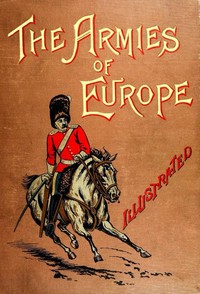
Readers approaching The Armies of Europe should attend to its dual nature: as a snapshot of European military organization in 1890 and as a document of how such knowledge was framed for an English-speaking audience. The translator's interventions—retaining German terms, adding corrigenda, revising figures—make this edition a distinct artifact, not a simple reproduction. Comparing the treatment of different nations reveals implicit hierarchies and alliances, while the technical detail rewards careful study of uniforms, weapons, and force structures.
Holding this old survey of armies, I remembered my grandfather’s shelf—the precise plates of uniforms felt like a quiet, orderly world. That same sense of ritual and duty returned when I later found Military Manners and Customs — Reading Notes, its pages tracing the strange ceremonies beneath the gunpowder. Both books whisper of a past order, oddly comforting in its firm details.