
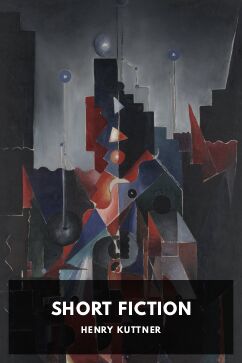
Short Fiction - Henry Kuttner
Henry Kuttner was a writing machine during the 1940s and 50s, pumping out stories for pulp magazines with his wife, C.L. Moore. This collection gathers some of his best short work, a wild ride through bizarre concepts and snappy plots. Don't expect deep character studies or epic world-building. Instead, you get lightning-fast setups and brilliant, often chilling, payoffs.
The Story
There isn't one story, but dozens of quick, potent shots of imagination. In one, a harmless-looking household appliance is actually a sinister robot from the future controlling its owner. In another, a man discovers a drug that lets him see the true, horrifying colors of alien dimensions. A classic, 'Mimsy Were the Borogoves,' involves children's toys from a far future that reshape their minds in terrifying ways. The plots are simple on the surface: a guy finds a weird thing, or a scientist makes a strange discovery. But Kuttner's genius is in following that simple idea to its most unexpected and logical extreme, which is usually somewhere very strange.
Why You Should Read It
I love this book because it's pure, unadulterated idea fuel. Kuttner wasn't afraid to be silly, scary, or profoundly clever—sometimes all in the same story. Reading him is like watching a master magician perform close-up tricks; the effects are immediate and dazzling. You can see the DNA of so much modern science fiction and horror in these pages. More than that, there's a joyful energy here. You can tell he and Moore were having fun, racing against deadlines and daring each other to come up with the next great twist. It's infectious.
Final Verdict
Perfect for fans of The Twilight Zone, Black Mirror, or anyone who loves a short story that packs a punch. It's also a must-read for writers looking for a masterclass in economical, high-concept plotting. If you think old sci-fi can't surprise you, Kuttner is here to prove you wrong with a sinister laugh and a brilliantly weird idea.
You are viewing a work that belongs to the global public domain. Knowledge should be free and accessible.
Karen Anderson
9 months agoThe layout of the digital version made it easy to start immediately, it manages to maintain a consistent flow even when discussing difficult topics. Finally, a source that prioritizes accuracy over hype.
Jessica Gonzalez
11 months agoOne of the most comprehensive guides I've read this year.
Charles Thompson
6 months agoFrom a researcher's perspective, the data points used to support the main thesis are quite robust. I’ll definitely be revisiting some of these chapters again soon.
Matthew Thomas
3 months agoIt took me a while to process the complex ideas here, but the footnotes provide extra depth for those who want to dig deeper. This has become my go-to guide for this specific topic.





Elizabeth Anderson
2 years agoAfter spending a few days with this digital edition, the language used is precise without being overly academic or confusing. A refreshing and intellectually stimulating read.