
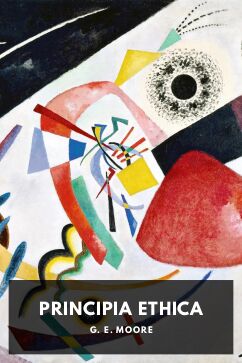
Principia Ethica - G. E. Moore
Okay, let's be real. When you hear 'early 20th-century philosophy book,' you might picture a dry, impossible-to-read textbook. Principia Ethica is not that. It's a passionate argument about the most fundamental question: what do we mean when we call something 'good'?
The Story
There isn't a plot with characters. Instead, the 'story' is Moore's intellectual journey to clear up a massive confusion. He argues that for centuries, philosophers have made a basic mistake. They've tried to define 'good' by pointing to other things, like happiness, what's natural, or what God commands. Moore calls this the 'Naturalistic Fallacy.' He says 'good' is a simple, unique quality—you just know it when you see it, but you can't explain it in simpler terms. You can't define 'yellow' without just pointing to it, and 'good' is the same. The rest of the book explores what this means. If we can't get a simple definition, how do we make good decisions? Moore suggests the best things in life are 'organic unities'—complex wholes like loving relationships or appreciating a beautiful sunset, where the total value is greater than the sum of its parts.
Why You Should Read It
This book made me stop and think about my own moral shortcuts. We all say things like 'That's just wrong' or 'It's good because it makes people happy.' Moore forces you to examine those statements. Is happiness really the same thing as goodness? His writing is sharp and often witty as he takes apart other theories. Reading it feels like having a brilliant, slightly stubborn friend question everything you thought was obvious. It's not about giving you answers, but about teaching you how to ask better questions. You'll start spotting the 'Naturalistic Fallacy' everywhere—in politics, advertising, and everyday conversations.
Final Verdict
This is a book for the curious thinker, not the casual reader. It's perfect for anyone who's ever taken an ethics class and left feeling unsatisfied, for book club members who want a serious debate, or for fiction lovers who want to try something completely different to stretch their brains. You don't need a philosophy degree, but you do need patience. Some passages are dense. But if you stick with it, you'll find a powerful and surprisingly beautiful idea at its heart: that the most valuable things in life are complex, personal, and undefinable. It's a challenging hike for your mind, but the view from the top is worth it.
This publication is available for unrestricted use. Preserving history for future generations.
William Garcia
8 months agoExtremely helpful for my current research project.
Charles Moore
2 years agoBefore I started my latest project, I read this and the breakdown of complex theories into digestible segments is masterfully done. This is a solid reference for both beginners and experts.
William Thompson
1 year agoThe layout is perfect for tablet and e-reader devices.
Jennifer Wilson
1 year agoThis digital copy caught my eye due to its reputation, the footnotes provide extra depth for those who want to dig deeper. It cleared up a lot of the confusion I had previously.


Robert Martin
2 months agoI particularly value the technical accuracy maintained throughout.