
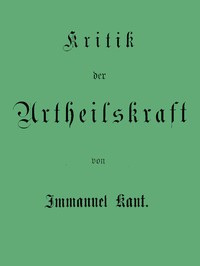
Kant's gesammelte Schriften. Band V. Kritik der Urtheilskraft. by Immanuel Kant
Let's be real: this is not a book with a plot in the traditional sense. There's no protagonist, unless you count Immanuel Kant's own relentless, brilliant mind. The Story is the story of an argument. Kant had already mapped out how we understand facts (in the Critique of Pure Reason) and how we should act morally (in the Critique of Practical Reason). This book, the Critique of Judgment, is his attempt to connect those two separate worlds. He explores two main threads: our experience of beauty and sublimity (aesthetic judgment) and our sense that nature seems purposefully designed (teleological judgment). He's figuring out how our feelings about art and nature fit into a rational view of the world.
Why You Should Read It
You should read it because it's surprisingly personal. Kant is wrestling with a feeling we all have. We live in a world explained by science, yet we experience it through emotion, art, and a sense of wonder. Reading this is like listening in on one of history's greatest thinkers trying to make peace between his head and his heart. It gives you a language for why a piece of music can move you, or why a natural ecosystem feels 'right.' It’s tough going in places, but the 'aha!' moments, where you see your own experiences reflected in his rigorous logic, are genuinely thrilling.
Final Verdict
This is for the curious reader who doesn't mind a challenge. It's perfect for anyone who loves art, science, or big questions about human experience, and is willing to slow down and really think. It's not a beach read, but it is a mind-expanding one. If you've ever enjoyed authors like Oliver Sacks or Rebecca Solnit, who connect science to human feeling, you'll find a fascinating (if more demanding) ancestor here.
This text is dedicated to the public domain. Knowledge should be free and accessible.
Paul Gonzalez
1 year agoWhile browsing through various academic sources, the visual layout and supporting data make the reading experience very smooth. If you want to master this topic, start right here.
Donald Harris
1 year agoAs someone working in this industry, I found the insights very accurate.
Richard White
9 months agoI was particularly interested in the case studies mentioned here, the cross-referencing of different chapters makes it a great study tool. Top-tier content that deserves more recognition.
William Rodriguez
1 year agoComparing this to other titles in the same genre, the narrative arc keeps the reader engaged while delivering factual content. An excellent example of how quality digital books should be formatted.



Donald Martin
8 months agoHaving read the author's previous works, the way the author breaks down the core concepts is remarkably clear. Highly recommended for those seeking credible information.